Showing posts with label literature. Show all posts

Wednesday, August 19, 2015

The Marionette Drummer


Shivering canvas of silence,
Expectantly awaiting the brush-stroke of sound.
Squeak of the seat,
Sticks rest on the rim,
And my body is surrendered to puppet-master,
Like a marionette merely along for the ride.
Sensual whispers guide my hands from head to head,
Crash in my ears like waves of pleasure,
Hair rising, skin quivering,
Mistress of music demanding
My undivided attention.
The ride leaves me breathless, shaking,
As last brush-stroke rings unencumbered:
Brilliant color giving way to the forgetful silence.
And here I sit – just another drummer,
Just another day.

Monday, August 17, 2015

Unbounded by Words

Dearest reader,

I have said time and again, to you specifically, that the happiest things in life are unbounded by words: specifically mine.  So it happens that I am putting virtual ink-to-page for your enjoyment two weeks and two days after the most joyous day of my life.  I am sitting in my wingback armchair listening to Brahms, and watching my lovely bride read a book on philosophy on my right.  I don’t have much more to say in this respect, not because I am indifferent; rather, I am, to be sure, one of the happiest men alive at the present moment.

I find that being married has occupied my mind in ways that have diverted my attention from my inspiration as no other.  Or perhaps I should say, it has changed the form of my inspiration for the time being.  In the last few days I have been divulging my lunch-hour to Rilke, Bastiat, and Fitzgerald, and so it happens that my Scarlequain is merely simmering in the rear of my mind.  Like the Music, my poetry is always present in the recesses of my cognizance, but as of late it has resigned itself to an ironic:

Crawling, parched
Month-long march.
Dry and barren,
Take me, Charon:
Silent Muse.

And while I in no way feel that the Ferry Man of Hades is pulling my inspirational muse to hell by his boney grasp, I am well aware of my tenure in the desert of noninspiration, if I may coin a rather unoriginal term.

My job has felt new and daunting to me for some time now, until, as it happened, an employee newer than I asked helplessly for directions on a simple task.  “I told [her].  And as I walked on I was lonely no longer.  I was a guide, a pathfinder, an original settler.  [S]he had casually conferred on me the freedom of the neighborhood,” which was, in this case, my workplace.  Ah, Fitzgerald.  Even in the third or fourth read-through (honestly, who is counting?), Gatsby still fails to disappoint.

I have also been spending time reading The Poet’s Guide to Life: The Wisdom of Rilke in my spare time, and if you know anything about me you’ll know I cling to every word this literary giant saw fit to pen.  As it turns out, Rilke hand-wrote thousands of letters during his lifetime – mostly as a distraction from his “work” – poetry writing.  I stumbled across a passage where Rilke describes these letters, on all topics and to all demographics, as an escape from the desert of noninspiration.  An oasis, if you will.  Indeed, it has often been said that Rilke has done more good for the literary community through his letters than he did through his poetry.  I daresay Rilke was beginning to suspect the same as he approached his final stroll towards Charon’s ferry-house, as he gave permission for them all to be published.  At any rate, it made me smile, because I realized there is no ear more open than the blank page intended for some distant recipient.

And so, dear reader, this is where I bid you farewell for the time being.  This is where I take my last sip at the oasis and hope with a smile that the desert ends just over that hill.  For, you are my open ear: my addressee that gives my poetic halt a respite.  I sincerely wish that I, like Rilke to me, have conveyed some measure of hope and happiness to your daily walk.


May the sand quickly leave your shoes.

Monday, July 20, 2015

Suspended Sensations


Whispering Echos
Flitting in dark corners.
Warm silence
Filling your ears,
Like Alice,
Sleepy Wanderer,
Wondering: Where
Am I again?
Sneaking Suspicion
Sneakers stray
In circles chasing
A flutter flying
Just outside the 
Blurry landscape lines.
Rolling over, crack an eye,
There, over the clock,
A moth flitting.
Pillow warm,
Filling your ears
Dreams: whispering
Echos.

Monday, June 1, 2015

Memory Drawer


Demons come out to play,
Old creaky hinges sway.
They dance in the mind,
To old wounds blind:
Memory Drawer.


There is so much that I could write to you about, but words escape me.  For those of you who don't know, I'm working full time now, and as of today, I'll be married in two months.  I'm back at home for the time being, and the transition hasn't been the easiest for me - I feel as if I'm 16 all over again, except with lots of experiences and history behind me.  College is over with, for heavens sake.  At any rate, I was digging through a drawer in my bed recently that I have reserved for "memory" things, and I stumbled across many artifacts of people I have interacted with in...less than favorable circumstances.  It tore me up a little, and inspired the previous poem.  It's amazing the things that small pictures and poems and bracelets can stir up.

Further, and I'm not sure if it's the transitions or the hard decisions coming up or what, but I've been having nightmares - not bad dreams, as if they are something a little child suffers from - every single night for the past few weeks.  I have a host of reasons why this might be, but as I said, reasoning escapes me at the moment.  All I have for you is this poem.  Perhaps that will better convey to you what I feel.

And perhaps next time I write it will not be so...terrifying.

Standing on the edge of an abyss,
Looking into a cesspool of nightmares,
Forced to choose for a tryst.
Your featherweight dreams drown,
Dread dancing in delight,
Eating away at the edge 
of your consciousness.
A creak, a squeak, the
footsteps of a ghost vanishing
the moment you move your mind
in its direction.
Musings of murder making merry,
Sounds of seduction and sin
suggesting your downfall,
Perspiration pouring,
Heart hammering,
Blackness bombarding your body
with the weight of the wrongdoings
of your life.
Slumber drags your wakeful
eyelids closed against your will;
Sweet sleep laced with terror;
Nightly rest haunted by
ceaseless spectors.

Monday, February 2, 2015

Textbook Poetry

I balk against the idea that Spotify can predict what type of mood I'll be in depending on the season and music I've listened to in the past.  However, as the snow blows in a twenty mile an hour wind, I concede to the weird technological genius that says I should be depressed because it's February and I usually listen to Cloud Cult when I'm depressed in February.

I have had a migraine most of the day which gives me crazy weird dreams when I try to sleep it off, and I decided I needed to let my mind wander in a short (hopefully) blog post to get over the post-migraine "hangover."

I have been having trouble focusing in my Biology class recently.  This being my last semester of college (ASDLGHIASLDFGKJHA), I am realizing more and more that your undergraduate degree is merely four years and thousands of dollars spent so that you can check off a little box that says "I have completed my undergraduate degree."  As I think back over the things I have learned in college, I can point to just a very few things that I actually learned in the classroom.  Everything else that I truly learned - which is a lot for just four years' time - came from heartbreak, heartmend, and good relationships.  As a senior if I were asked by a freshman for one piece of advice to truly get the most out of their college experience, do you know what I would tell them?

As are overrated.  Find people who you can invest in, and who will invest in you, and Love them.  That is what makes your college experience worthwhile.  Because as soon as you graduate, no one will care that you made an A in Biology or International Relations.

Why must it be this way?  Why have years of education that used to be extremely meaningful turned into a merely list of requirements the State has us fulfil?

TRAdiSHUN!

Ironically enough, cultural experiences and cultural definitions have forced us into thinking that things need to be done a certain way for everyone, and if you don't do those things that particular way, it's wrong and you'll be unsuccessful.  Even in "Christian" institutions we have cultural definitions that absolutely CANNOT be broken.  Forget Christ and salvation.  If you do or say XYZ, or don't do and say XYZ, you'll get excommunicated, fired, forced to retire, whatever.  And we call this Christianity!

I have no particular structure to this rant, and I make no plans to explain myself.  I've recently dabbled in a form of poetry called "blackout poetry," and it keeps me occupied in Biology.  My Scarlequain has stayed uninspired recently, since, sadly enough, Dr. Wilhoit was one of its chief inspirations.  But since he has fallen prey to cultural definitions, the inspiration has left me.

Hated at first,
Now hurts the worst,
Lectures inspire,
Turned poetry's ire:
Lost Inspiration.

At any rate, here is a sample of this new "textbook poetry."  Somehow, this is tied in to all my jumbled thoughts for today.


Some questions for you to consider that I've been mulling over:
1) Have we cheapened the word Love?
2) Are the things we do really Christian? or are they just culturally accepted?
3) Where do you stand in Eternity?

I'm praying for you, friend.  Whoever you are.  I hope that the centuries bring your ideas alive in ways that transcend cultural conditions.


Tuesday, October 7, 2014

The Intrigue of a Puddle

I was thinking about the transition of my life from where I was to where I've been on the short walk to music history this morning, and this poem resulted.  Take it at face value.

The Intrigue of a Puddle

It's odd the men who sometimes inspire, 
And today Springsteen comes to mind.
Reliving Glory Days and winding back time,
Ignoring decisions driving down to the wire.
Future career, struggles, and a ring,
But walking to class, a puddle calls.
Video games, for the first, numb grade's sting,
Responsibility stumbles; good health stalls.
Am I young or a decrepit old man,
Rushed through my prime years of life?
A constant fight for Purpose and Meaning,
But wondering if larger letters even matter.
No five-line message in this mess,
What you see is what you get.
What little sleep comes fraught with nightmares,
A mirror darkly reflecting mind and soul.
Come drown with Bruce and me,
Forget the toll of Death's bell.

Tuesday, September 2, 2014

We've Come Full Circle

This isn't Scarlequain, but I had to share it.  I attended the Senior Worldview class today for the first time, and pretty much all of my friends are there.  Some of them were even in my freshman worldview class oh so long ago, and one in particular inspired one of my favorite poems that I've written, Through the Stained Glass Window, which I wrote in freshman worldview.  Now, nearly 4 years later, we're together again, same topic, same professor.  But we're older, wiser (we hope), and have experienced so much.  Looking over at me today in class, she mouthed, "Creasy...we've come full circle."  And instantly I was inspired.  Here is the product of that inspiration.  Enjoy!


Circular Stained Glass

To Michelle, in honor of the full circle our college experience has undergone.

A tribute to things come full circle,
Most often falls short of the mark,
Set in stone in the literary canon.
The reflection in your eyes no less stark;
A twinkle dimmed, skin leathered with a dose of tannin,
The innocence of the windows to your soul tainted: stained.
The clear glass of the past colored with pain,
But artfully patterned in a beautiful shape.
We have grown so far from our first class,
We loved people, we have laughed and dealt with hate,
And all this contributed to the new stained glass.
From being inspired by a pair of eyes,
To an ever-shifting inspiration of Poetry,
The sought-after goal has a new prize,
A new Face, a new salary, and a new maturity,
And the progress, though at times extremely woeful,
Has made our eyes a work of glorious Art/
This new phase of Life brings a new serenity.
And even when the way is hard, and perhaps we part,
Remember the Stained Glass, the prize:
And covet something more than the temporal:

Covet one more look into His Eyes.

Thursday, August 28, 2014

Write in Your Books!

Write in your books?!  The act was nearly a sin for me when I was growing up.  Books are *special* and they should be respected, I was told, and back then, I believe it was true.  Books are indeed special, and as a child, I had no use for writing in them, as I do now.


When I was in highschool, one of my last two years, I took a Freshman English course (in which I met one of my best and dearest friends).  Ms. Alison Haupert was my instructor, and from the very beginning she required us to underline, write in the margins, and jot down our thoughts in between the lines of our books.  I remember the first time I put pen to printed page; I felt as if I was ripping a piece of my heart out.  I love reading, and so books were and are extremely dear to me.  Writing in them...just felt wrong!  But I followed the assignment, and before I knew it, I found that I began to understand and retain what I was reading far more than I ever had before.  I could articulate my thoughts and feelings about the literature on a deep level, and when I reread the books (yes...even in fiction books), I could see my old thoughts, expand on them, correct them, and look back on my old immature ways of thinking and smile.  Writing in books has become a way of life for me, and I love it!

Just the other day I began rereading The Small Bachelor by P.G. Wodehouse, a book that I performed in highschool as a humorous duo with a great friend.  Now, in my senior year of college, I write in every book I own, but this book gave me pause.  I started reading and, at first, I didn't want to write my thoughts in the lines.  There is so much memory and emotional stock in this book!  How could I write in it?  At that moment, I was pulled into a paradoxical conflict.  On the one hand, I felt affronted by the thought of "defacing" such a dear book...but on the other, I felt as if I was telling the book "I don't respect you enough to share my thoughts and feelings with you.  I don't want to invest in you so that when I look back later, I'll see my influence on you."

Well of course...that got me thinking.  Read my latest Scarlequain and an old quote I have to see what I mean.

Letters, Words,
Sentences heard,
Invest time,
Notes in the lines:
People books.

"There are two people you’ll meet in your life. One will run a finger down the index of who you are and jump straight to the parts of you that peak their interest. The other will take his or her time reading through every one of your chapters and maybe fold corners of you that inspired them most. You will meet these two people; it is a given. It is the third that you’ll never see coming. That one person who not only finishes your sentences, but keeps the book."
-Anonymous

The quote doesn't exactly cover what I'm talking about, but I think you get the connection.  To some degree, people are like walking, talking, feeling, emoting books.  We are a treasure trove of information that is begging to be interacted with, loved, and remembered.  And just as with books, if you actually invest your thoughts and feelings and time, if you underline the interesting areas, take note of them, and if you come back to those things later and see how you have grown with those things, your understanding and your relationship with that person will be just as deep and as meaningful as your deepening understanding of your literature.

Many of us are just going back to school after a long summer break.  Books and people surround us and saturate our daily life.  So here's something to think about.  Want to do better on tests and understand your work more?  Pull out a pen.  Do you want to understand and relate to those people around you to whom you never could?  Invest some time.  Pull out a "pen" and start taking note.  The world not only needs better students.  The world needs understanding people.

Monday, August 4, 2014

Realistic Romantic: The Need for Dreamers in a Real World

"Bad books always lie.  They lie most of all about the human condition."

-Walker Percy

If you have been following my blog the last couple of posts, you will have seen several references to Steven Garber's book Visions of Vocation, specifically to the fact that we as humans are responsible for the knowledge we have about the world – to sum up in a short quote, "Knowing what I know, having heard what I have heard, having read what I have read, what am I going to do?  Being smart isn't good enough...always and everywhere, the revelation [knowing] requires a response."  

Ever since January 9th of this year when I first published "romantic, Romantic, Romanticist," I have been intending to write this follow up post, due to its failure to address the human condition, and due to criticism of my outlook on life as a Romantic, specifically because, in my critics’ view, merely being a Romantic isn't practical: humans need more than just a good story and an avant-garde vocabulary as a solution to life.

In my previous post on this topic, I began by quoting Lewis Carroll, and I shall do so again. "Who in the world am I?  Ah, that's the great puzzle."  In my post I presented an aspect of who I am as a person: I am a sappy romantic, I enjoy being a Romantic writer and musician, and I am a Romantic in my outlook on life; that is, I believe there is always a deeper story with wonderful vocabulary that is waiting to be pursued.  I admit this is a rather positive outlook on life; at first glance it may seem that I am lying about the human condition.  It may seem that I believe all life is about is pursuing who we are as individuals, and pursuing a good story.

In an effort to fully tell the Truth in my writing (which is, to be honest, the only reason I even began writing in the first place), I wish to convey to you the human condition.  We are Broken.  Humanity has been broken for many, many years, and there is no possible way that we can fix ourselves.  The world in which we live is also broken, and so it is often full of wounds that seem incurable (Hitler, Stalin, the Israel/Gaza Conflict, Ebola outbreak, disease, and death).  At first glance, the world is not a positive place.  Indeed, at first glance, the world is a terrible place.  At first glance the best possible outlook on life is to live large today, for tomorrow we die.  This is the human condition.  This would be my view if the story ended there.  However, it is not the end of the Story.

The God who created us also gave us a solution to our willful brokenness.  He sent his Son to repair us in a way that we cannot do on our own.  Without Him, we are destined for eternal brokenness, but He gives our meaningless lives a Purpose that we only have to accept by his grace through faith.

Art is something that I discuss and think about quite often.  Art is, if you think about it, a direct expression of the current human condition by people who think deeply about it and project their ideas into the future by words, paint, canvass, paper, stone, lyrics, music, you name it.  William Barrett sums this up perfectly in his Irrational Man: “Every age projects its own image of man into its art.  The whole history of art confirms this proposition, indeed this history is itself but a succession of images of man.”

So artists are the closest thing to real life “prophets” that we have today?  That’s not entirely what I am saying.  It is important to realize, however, that artists tend to have insight into the future based specifically on their understanding of the human condition.  Think about this:

To understand this cusp of a new century – marked as it is both by the sociological reality of the information age and the philosophical movement we call postmodernism – we have to pay attention to the novelists, filmmakers, and musicians who are culturally upstream, as it is in their stories, movies and songs where we will feel the yearnings of what human life is and ought to be.  Whether staged or celluloid, in print or on computer disks, they are fingers to the wind.  Why?  Artists get there first.
-Steven Garber

This quote sheds light on another facet of my life: if you were to look at my movie collection, or my music selections, or the books I read, you will not always find material that is, on the cover, “Christian.”  As an artist, something I haven’t been able to put into words until now, I believe that I should keep a finger to the cultural winds of my time to be better able to understand which way it is blowing.  But I suppose that’s another topic for another post.  For now, let’s focus on the story-tellers themselves.

Steven Garber quotes Bono in his book Visions of Vocation.  He quotes Smashing Pumpkins.  He references movies and articles and books and people on a fantastic scale, and it is evident to me that he believes “stories with legs” – stories that tell a tale and then live that tale out in real life – these stories are the most effective way to convey the human condition and hint at a solution to it.  As I read his book, I keep feeling myself grow in that “haughty without being so...proud, but humble about it” attitude of being a Romantic.  I keep reaffirming in my mind that “I am most certainly not afraid to pitch my tent in the Romantic crowd.”  I reiterate to my critics that “Here, to be famous is to be dead.  But I'd rather it be that way.”  However, Mr. Garber opened my eyes to the facet of “romantic, Romantic, Romanticist” that was incomplete.

“Epistemologies have ethical implications . . . ways of knowing are not morally neutral but morally directive.”  Mark Schwehn, quoted by Garber, put this reality into perspective for me.  In simple terms, Schwehn is saying what Mr. Garber has been advocating for his entire book, and what I wrote about last: knowing must mean doing; in fact, that truth is so strong that it carries moral implications: knowing without doing carries dire consequences.  Even if we don’t see those consequences today, they will carry themselves out somewhere, somehow, bringing with them more of the broken condition that we are so vehemently striving against.  Therefore, I acknowledge that we cannot view the world merely through Romantic lenses: we need Realistic ones too.  Think about it; you feel this way all the time:

“Why else do we care about what someone knew when?  Our newspapers, courts, even family conversations are full of the assumption that if one knows, then one is responsible.  If you knew, then why didn’t you do.”
Visions of Vocation

Reading this quote for the first time, I realized something that, perhaps, my critics didn’t even realize they were touching on: I have found words for a new, small, area of my life, but my post was, in a way, lying because it didn’t take that knowledge and apply it to the human condition.  It didn’t practically put my new knowledge to work.

“Very, very bright people do not always make very, very good people.”  Yes, I think Mr. Garber is correct.  Just writing about bright ideas does not make a person good, and I think I may have been taking too much satisfaction in just philosophizing and not actually applying these philosophies to my life.

The fact still remains however, that I am a die-hard romantic, Romantic, Romanticist.  I am a Dreamer, and this is evident in nearly all of my writing.  To some degree though, I do think that two authors Mr. Garber reveres were dreamers too, and the world would be far worse a place if they hadn’t been: Vaclav Havel and Albert Camus.  If you have read nothing about or by these two men, you should.  They were dreamers who saw the human condition, wrote eloquently about it, either in fiction or lecture, and then applied that writing to their lives.  They gave their ideas legs.  This is what I was missing: a good Romantic isn’t one who merely invents immortal heroes for pleasure.  A good Romantic invents immortal heroes and then physically demonstrates with his life why those heroes matter.

"As the poet Bob Dylan once sang, 'Everything is broken.'  Yes, everything, and so we must not be romantics.  We cannot afford to be, just as we cannot be stoics or cynics either."  I will disagree with Mr. Garber on this one point.  Some of us must be Romantics.  It’s in our daily life, our chemistry, our DNA.  We have been called to be Romantics, and that is extremely important.  The world needs artists to put their fingers to the pulse of culture to measure where it is going.  The caveat is that we must be Realistic Romantics.

Artists see first,
Humanity's worst,
We Romanticize the Story,
To create hope and glory:
A Realistic Romantic.

As a Realistic Romantic, I want to know the human condition for what it is.  I want to constantly observe the catastrophes that pervade our history, Romanticize them in ways people will remember forever, and then remind them why it all matters.  Why are we drawn to the knight in shining armor who slays the dragon of Evil?  Maybe it is because we are daily fighting our own dragons that desperately need to be slain?  Maybe because we are not the knight ourselves?  This is a small responsibility of my life.  I may not be good at it, but I know about it, and I thereby have a responsibility to use it.

“Whether it is kids in Brooklyn or political complexity in nations scattered across the glove, [we want] the work of [our] hands to matter, to be part of ‘tearing a corner off of the darkness,’ in Bono’s poetic image.”

So, dear reader, knowing what I know, I am striving to satisfy my implicated responsibility because of that knowledge.  I am a Romantic, but not just.  I must also be Realistic, both in my stories and in my life.

What corner of the darkness are you tearing off?


Saturday, April 26, 2014

Standing with Stravinsky: Defining Good Art

You know, there is very little that gets my blood boiling more than a good clash over something I feel strongly about.  More often than not this clash happens with my peers - over a cup of coffee, sitting in the cafeteria - you know, the stereotypical college student conversations.  This time, however, it took place around 9:23am in my first class of the morning: Expository Writing.

Today in class, we were not discussing our up-and-coming paper (I think it was our journal review, and, being the music major I am, I was comparing two articles on the opera Don Giovanni); instead, we were discussing whether or not one can define "good art."  (Random aside...I love semicolons.  I kinda do a little celebratory fist-pump when a good sentence featuring a semicolon comes together.  I guess I owe that to a friend of mine.)  From my professor's perspective, we can judge whether or not art is "good" by comparing it to the standard of accepted material (let's call it the "canon" of art, because that's really what a canon is): for example, we can judge physical art (sculptures, paintings, etc.) by people such as Picasso, Van Gogh, or da Vinci, or music by people such as Bach, Stravinsky, or Mozart, or poetry by people like Frost, Longfellow, Shakespeare, etc.  By comparing the material to the accepted standard set by the canon of each field of art, we can determine if it is good.  After all, Something gave these artists immortality in some form or another.

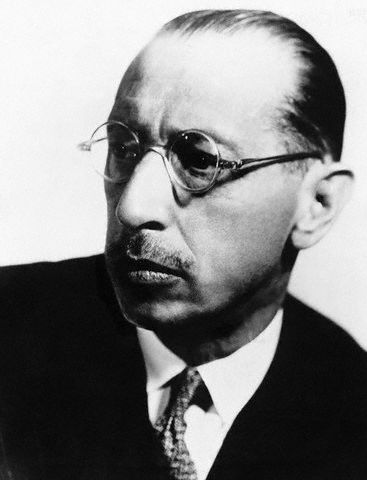
I disagreed with her method of defining good art, but I wasn't exactly sure how to put my disagreement into words.  The position she held left no room for changes away from the accepted canon, and it left no room for artists whom immortality avoids for one reason or another.  Being a musician, I could not help but think of the first time Stravinsky's Rite of Spring was performed: the escape from traditional orchestration and Tonality was so immense that vegetables flew, riots broke out in the theater, and Stravinsky was denounced by the Russian government for being a "decadent artist."  Now, however, Stravinsky is revered as the greatest composer of the 20th century, and his works are performed in his memory yearly (I recently saw the Rite of Spring for the first time two days ago - I forgot to breathe for much of the performance).

Being a young artist myself, and having created (I think) a form of poetry that cannot be compared to any of the great poets of the canon of art, I shrink from the idea that my art cannot be considered good.  My form is new, and just like Stravinsky's leaving of tonality, it has the potential to be ignored and even ridiculed for branching off in a new direction.  I was at a loss - I knew of no one in the "accepted canon" who supported my views, until I read Rainer Maria Rilke's Letters to a Young Poet for the second time (which, if you haven't read, you simply must), and stumbled across a series of quotes that perfectly illustrated what I was trying to verbalize in class (and contrary to my professor's desires, I will not try to summarize the quotes - I will directly quote Rilke.  He says what needs to be said in a tongue far more elegant than mine).

Rilke prefaces his defense of art by saying, "[Art] is not immaculate, it is marked by time and by passion, and little of it will survive and endure.  But most art is like that!"  Art surviving Time is not necessary?  Immaculate art is not necessary?  And on I read, wondering if Rilke would mention the Immortal Bards and their accepted Standard, until I saw:

"Even the best err in words when they are meant to mean most delicate and almost inexpressible things."

Ah, even those who maintain a mastery over words that I will never achieve err.  Be aware, therefore, dear reader.  If the best err, so much more shall you and I.  But reading on, I wondered if there is any hope for finding the standard I have been searching for, and suddenly, Rilke spoke directly to me.

"Nobody can counsel you and help you, nobody.  Search for the reason that bids you write; find out whether it is spreading out its roots in the deepest places of your heart, acknowledge to yourself whether you would have to die if it were denied you to write.  If you may meet this earnest question with a strong and simple 'I must,' then build your life according to this necessity; your life even into its most indifferent and slightest hour must be a sign of this urge and a testimony to it."

Expectantly, I read on, not daring to completely digest what Rilke had just told me, until I found what I was looking for.  According to Rainer Maria Rilke, "A work of art is good if it has sprung from necessity."

Must you write?  Then do it.  Do not worry about the critics; do not worry about the standard.  Good art is yours, dear reader.  Filled with passion and life, your life, good art is art that you feel you must create.  Stravinsky knew this.  Rilke knew this.

"Being an artist means, not reckoning and counting, but ripening like the tree which does not force its sap and stands confident in the storms of spring without the fear that after them may come no summer.  It does come.  But it comes only to the patient, who are there as though eternity lay before them, so unconcernedly still and wide."  Sometimes patience is the hardest thing to achieve, especially in art.  As young artists, we wonder if what we are creating is worthwhile, and I believe in some senses that worry is justified.  We know that there is a canon, and a part of us, large or small, wants to be accepted.  But that isn't what truly matters.  What matters is that we continue to create, just as those who came before us.  Our art may not affect many people, but be assured, your art will have an effect.  You may not see it, but it is there.

Practically speaking, Rilke gives two more pieces of advice that I think need to be taken to heart by budding artists such as you and me.

"Read as little as possible of aesthetic criticism - such things are either partisan views, petrified and grown senseless in their lifeless induration, or they are clever quibblings in which today one view wins and tomorrow the opposite."  The critics may persecute you and your work, but it is important to remember that they are not the final authority on your art.  Perspective is everything.

And finally, "You cannot disturb [your artistic development] more rudely than by looking outward and expecting from outside replies to questions that only your inmost feeling in your most hushed hour can perhaps answer."  Live your life in pursuance of Truth first, and then create as our Creator did.  Fill your work with your life.  You Were Born, your life has value endowed upon you by our Creator, and your art, the expression of that value, is Good.

I guess the moral to this lengthy blog post is this: keep creating.  Immortality and fame are both unkind, but unnecessary for your work to be "good art."  And be careful how harshly you judge other people's art; do not become the critics Rilke spoke so lowly of: you could end up mocking the next Igor Stravinsky.

Necessary; from the heart,
Not "classic," but apart,
Let heartstrings sing,
Into Immortality spring:
Defining "Good Art."

To Rainer Maria Rilke, for reminding me that I do not create and I am not an artist for fame or immortality.

Thursday, March 13, 2014

Combating Reality in Grinder and Grains

Dear Reader,

I can't tell you how much I've missed writing you.  So much has been on my mind of late, and I haven't found the words or the poetry to express what this vortext is doing to my upper grey matter (yes, I did invent a new word; do you like it?  Yes, "grey" is better spelled that way.  "Gray" just looks too harsh.).  However, let the record show that, talks with fathers (mine), wonderful authors (specifically F. Scott Fitzgerald), and a surprisingly pleasant change of atmosphere do me wonders.

I had the good fortune to realize through someone (my mother, I think), that the location that my favorite coffee-shop in my hometown used to occupy was again filled, and it was taken by a mom-and-pop cafe.  I was deeply saddened when the coffee-shop had left its previous home (a 100 year old house), in exchange for a larger, warehousey building (there he goes again with the weird words...).  The coffee's quality suffered, and the atmosphere there took a change for the worse, in my opinion.  However, I am currently sitting in the very corner of Grinder and Grains Cafe (where, if I ignore the windows looking outdoors to my TN home, I feel as if I'm in a lodge in the Swiss mountains), and I am one of two patrons currently frequenting the quaint establishment.  The coffee here is satisfactory, and the chicken tortilla soup is exquisite.  I feel quite safe here, much as I do at Harmony House back on the Hill; for, as far as I know, this little cafe has yet to be found out by a large amount of people. I think I have found a treasure, and I revel in that fact.  A painting of a couple embracing under an umbrella adorns the wooden wall near me, typical coffee-shop music floats softly through the age-old house, and here I write.  Alone, but with my books, words, and thoughts to keep me company.

Lately, I have been feeling extremely...lost.  I know this sounds like the same words over a different tune (I suppose that would be an inverted form of strophicity?  For those of you wondering, I did just modify the word "strophic" to fit my needs), but I guess being at home, countless engagements of people younger than me (some of those old friends, an ex, or just people I used to consider much less mature than myself), my drawing near to the completion of my time on the Hill, and just a general lack of preparedness (or so I feel) for the future has amplified those feelings even more than normal.  For those of you who understood that previous sentence on the first try, I commend you.

At any rate, I have been wondering recently whether or not I am a child of the millennial generation, and how that will affect me in the near future.  I attribute much of the faults of that generation to a complete immersion in technology for most of their life (specifically feelings of entitlement and narcissism), and while this may not be completely accurate, from my experience it has had a large role in their upbringing.  While I generally do not think that I have been immersed in technology my entire life (I barely knew what the internet was until I was 15, and never had any type of phone or gaming system until at least my 16th year), I do feel as if I am an extremely immature person surrounded by people of a maturity unknown by most people in my generation.

I have friends in college about two years younger than me who are married and awaiting their first child.  And here I am watching/playing Pokemon (I even ordered Ash's hat), playing Legos, dressing like I'm still in my early teens, and relying on my parents for a lot of my livelihood while I'm in college.  And I can't help but ask myself if I'm somehow behind...if I've done something wrong.  Is it wrong to have the kind of fun I'm having at my age?  Should I grow up and move on to more serious things?  I have sworn most of life that I'll be wearing Converse from now on out, and I'll be a goof even when I'm old and white...but...why am I here and they are up there ahead?

I read The Great Gatsby (a MUST read...I don't care if you've seen the movie) and I read things in it like, “The truth was that Jay Gatsby, of West Egg, Long Island, sprang from his Platonic conception of himself…he invented just the sort of Jay Gatsby that a seventeen year old boy would be likely to invent, and to this conception he was faithful to the end.” and I wonder (because that is exactly how I am...constantly Romanticizing everything, just as Gatsby did) if it is indeed possible to form a Platonic version of me: to forget my past on such a level that I can become the man I've always dreamed I could be.  That vision is nothing like Gatsby's in physical grandeur.  I don't want the house, the wealth, or the people...but to be a man that is worth remembering.  I want to do that as a Christian, and I know I should be constantly tempering what I think and desire by God's Word.  And I do.  I guess I don't feel the comfort a lot of people say they have in it.  I think God requires of us the blood, sweat, and tears that worldly people shed on their own personal ambition.  I think service for Him is the end goal, but we are still required Gatsby's ambition if we want to be truly successful for Him.  I feel like I have shed quite a lot of blood, sweat, and tears, but lest you think I'm feeling entitled, I do not say I deserve anything; rather, I query to the void what those wounds, labors, and tears have accomplished.  Who am I because of my past?  Or should I shed my past and become my own man?  ...some questions that are probably best left to hindsight.  Yes, it is 20/20...but it sure takes a long time getting here.  I guess growing up takes a lifetime.

Pokemon and pranks,
But to be frank,
Immature and irresponsible?
Is growing up logical?
Combating Reality.

Here I sit, comfortably musing in a new favorite place of mine.  I am listening to Pavarotti's rendition of "Nessun Dorma" from "Turandot" for the 12th time since I've been here, and I refuse to look up the lyrics.  


Why?

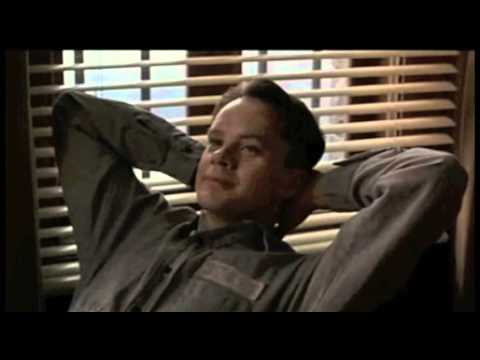
"I have no idea to this day what [he is] singing about. Truth is, I don't want to know. Some things are best left unsaid. I'd like to think [he is] singing about something so beautiful, it can't be expressed in words, and makes your heart ache because of it. I tell you, [his] voice soared higher and farther than anybody in a gray place dares to dream. It was like some beautiful bird flapped into our drab little cage and made those walls dissolve away, and for the briefest of moments, every last man in Shawshank felt free."

I may feel like I'm institutionalized in Shawshank right now.  But regardless of the circumstances I'm in, and no matter that I feel as if I'm in a pond but pining to be in the ocean, I'll keep doing my best to be who I want to be, and who He wants me to be.  Join me?  I really could use the company.

Tuesday, February 25, 2014

Lost in the Evidence


Tin man in Tin armor,
City-loving farmer,
Eagle Scout and musician,
Questions, queries, unanswered ambition:
Finding Me.


Christian, Oldest child, Romantic, romantic, Ginger, goal-oriented, focused, trumpet player, brass lover, Romantic era, big orchestras, principled, sap, music-lover, deep thinker, broken and bandaged heart, lover of family, big brother, patriot, UT fan, athlete, double-major, possible grad student, heart-breaker, player, exhausted, confused, obnoxious laugh, affectionate friend, flirt, sweet-tooth, afraid of needles, spiral staircase lover, fictional writer, aspiring poet, confidante, goober, goofball, addict, extrovert, touchy-feely, writer of letters, liar, lover of politics, movie collector, nostalgic, smeller of books, natural leader, public speaker, improv, classy, jazz, farmer, Eagle, hard things, Legos, Zelda, Simple Things, Beauty in the small, Words, capital letters, etc., so on, and so forth.

Afraid to commit,
Risk completely spent,
Hide in my shell,
Wish them all well:
Protecting Her.

Who is my Her?  I don't know.  Who am I?  I don't know.  Where am I going?  I don't know (this reminds me of a negative version of the Zoboomafoo theme song...).  But I do know that whoever she is doesn't want the Me I know now.  And so I try and protect all the Hers out there.  But I fail.  I wonder why the terrible things happen.  I wonder why the dragons of my life persist.  But I keep pressing on, still not knowing, still hoping to be a better Him.

"How should we be able to forget those ancient myths that are at the beginning of all peoples, the myths about dragons that at the last moment turn into princesses; perhaps all the dragons of our lives are princesses who are only waiting to see us once beautiful and brave.  Perhaps everything terrible is in its deepest being something helpless that wants help from us."  -Rainer Maria Rilke

...one day later...

P.S. (Because sometimes other things need to be said that are too curtailed to say in another post...and besides, who posts two posts within a day of each other, really?)

The English language is crazy.  I made a little note at the end of my International Relations Notes that says the following:

Baloo blew until blue.  Write rite right. The board is aboard the bored board.

What?

Also, have you ever wondered what would happen if you mixed up tenses in English?

I did that tomorrow, you know.  I will go to the store yesterday.

I hear the makings of a Lewisesque story.  My mind has been down the Rabbit Hole of late.  Which would explain away the "good-heavens-I feel-like-I-fell-off-a cliff-after-that-mood-change" post script you just read.

C'est la vie.

Saturday, February 1, 2014

Live the Question: Pursuance of Art

"When God created - and in that way made the perception of beauty and the human creation of art possible - he gave art a place in this world in which we live; and that world he called good.  Art is here because God meant it to be here."  - H.R. Rookmaaker

Imagine: as soon as God created, Art came into being.  It was the first thing to truly exist in our Universe, in our Reality.  Sure, He made Light first.  But in the same words he breathed Light into being, Art took shape too.  There was no war, no worries, no struggle.  In God's perfect Universe, alongside everything He created, there was Art.  God called this world Good.  Perfection centered around existence, praise to God, and Art.  After the Fall, that changed.  War and worry were added.  Our focus was violently shifted.  But Art is still out there, just waiting to be pursued.

In our society today, the arts are being mercilessly cut and removed from our education system to make way for the "essentials."  But really, when God created the Universe, were social studies, Language, Math, and Science the focus?  Not at all.  They were all in the working background.  I do not mean to say that these disciplines are unimportant; on the contrary, these disciplines hold the fabric of the Universe together.  But they are not the zenith of God's beautiful creation.  Always, there is Art.

There are some great people throughout history who have not forgotten this truth: Art is made to be pursued.
 Art is the capstone of every civilization.  In every Golden Age, the pinnacle is creativity.  Why do we remember the Golden Age of Athens or of Rome?  Great philosophers, sculptors, orators, painters: artists.  The nearest any civilization has come to perfection is always highlighted by the deepest Creativity.  There is a quote that is floating around on the internet: "When Winston Churchill was asked to cut arts funding in favor of the war effort, he simply replied 'then what are we fighting for?'"  The quote isn't verified to actually be Churchill's, but even if it isn't, the truth of those words has resonated in my head ever since I first read it.  Why on earth are we cutting funding to the Arts?  What then, are we fighting for?  Are we abandoning our Golden Age?  It seems we are no longer pursuing what characterizes the things that give the Lord deep glory.  It seems we are no longer pursuing perfection.

I have been searching for who I am for quite a long time, as most of you are aware if you read any of what I write.  Recently, however, I have decided that I want to be a music professor.  I love music; it is my Art.  I love writing; it is my Art.  Pursuing a graduate degree in music theory or music history (or both) is a place I can write and perform, and I can influence coming generations towards things that truly matter.

Like finding and using their Art for a Purpose that really matters.

And learning when a word needs to be capitalized.

I've been reading a lot of Rainer Maria Rilke's "Letters to a Young Poet" recently (sincerely thankful a dear friend gave me that wonderfully insightful book), and I was led to the following quote that helped solidify in my mind that I'm on the right track.

"You are so young, so before all beginning, and I want to beg you, as much as I can, dear sir, to be patient toward all that is unsolved in your heart and to try to love the questions themselves like locked rooms and like books that are written in a very foreign tongue.  Do not now seek the answers, which cannot be given you because you would not be able to live them.  And the point is, to live everything.  Live the questions now.  Perhaps you will then gradually, without noticing it, live along some distant day into the answer."

I am not claiming to have The Answer.  I assume that will not come until very few breaths remain in me.  If any.  But I do know I feel as if I have been given some new sense of direction, and I am following it.  I feel somewhere deep within me that it is leading me toward the Art that I have, for most of my life, greatly enjoyed but thought I would someday have to give up.  A part of me feels an odd sense of completion that I am being pushed in a direction that will not require me to give them up, but instead to pursue them.  To pursue my Art - my offer of praise to the ultimate Artist.

The past few weeks I have had small glimpses into the true definition and existence of Art with a capital A.  I am immersed in its beauty in ways I never believed possible, and in ways that nothing else can achieve.  I have no witty or strategic way to incorporate the following three poems I wrote under music's influence.  As you read them, try to imagine the most beautiful and all-encompassing thing you've ever experienced.  These are the feelings I have tried to capture.  I feel as if I'm in the middle of a vortex of words of pleasure, and in reaching my hands out I can only grasp a few.  Know that many more wonderful words and feelings still rage about me.

Overwash and flow,
Sing, violin's bow,
Flood my senses,
Beautiful, yearning, pensive:
Intense musical pleasure.


Shiver down the spine,
Whisper in time,
So much pleasure,
Measure after measure:
Musically Aroused.

Back of the mind,
Rolling in time,
On or off the seat,
Plagued by the beat:
Drum fill.

I don't know for certain where I am going.  I don't know the answer, but I am living the question.  
I am pursuing my Art.  
Music and words dance constantly through my head.  Lord, please don't let the dance stop.

Tuesday, January 21, 2014

Off-White Converse


Attention decline,
Look and you'll find,
Not much at all,
Consciousness call:
Music ADHD.


I feel much like Professor McGonagall in using that last Scarlequain.  Penned in October of 2013, I've been dying to use it in a post ever since, and today, I feel justified in doing so.  The past several hours have seen me listening to Symphony No. 2 Allegro Maestoso by Mahler, Concerto in Bb Minor for Piano and Orchestra by Tchaikovsky, various Rage Against the Machine (culture shock switching genres like that, I know), and a little bit of Fall Out Boy.

"Oh dear," you're probably saying to yourself at the moment, "here comes another musical rant.  Must I listened to this cultured gobbledygook?"  (Believe it or not, the y is not changed to an i in this particular circumstance...yay English...)  The answer is no, you don't.  Pardon me if I step on any toes.

"I've been dying to tell you anything you wanna hear, 'cause that's just who I am this week."

Thank you Fall Out Boy for pulling my readers and me away from another musical rant.  Thank you Fall Out Boy for dragging my readers and me into a rant I've been avoiding.  Sometimes to say what you want to you have to trash new ideas, pull from old ones, and just start writing.  So let's start with some poetry.


Followers of God,
A horrid facade,
Stained; caught; lured,
Makes insecure:
A Christian Mask.


Attending chapel at Bryan College has never really been my favoritest thing in the world (pardon my descent into less-than-eloquent English...sometimes I can't help myself).  There have been several people who have led chapel (who don't anymore, and now, in my opinion, chapel is struggling a bit.  As is the entire music department, but that's another rant for another time...) who have been extremely influential on me spiritually.  But as I said, they are gone, and chapel isn't what it once was.  Which is why the previous chapel speaker at the Engage Conference we held at the beginning of the semester rocked my world/boat a bit, so to speak.

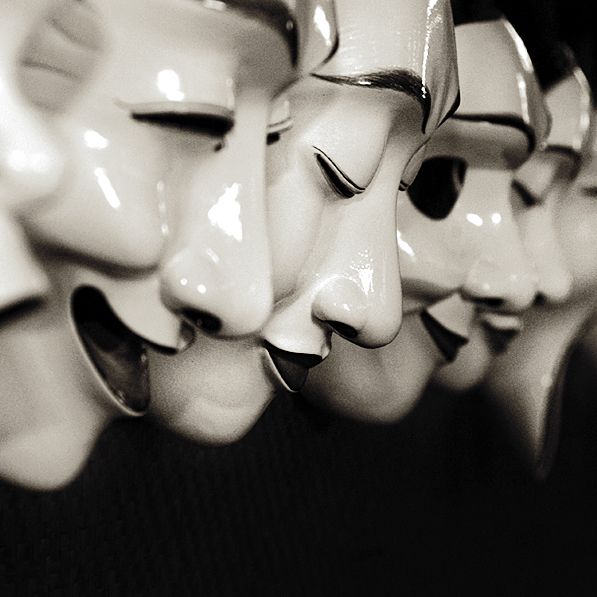
Recently, I have been very upset at the local church.  I said everything that the speaker pointed out as faulty.  I didn't want to attend a local church because the people there are a bunch of self-righteous cover-ups.  I understand why agnostic friends say they don't want to be Christian because they're all hypocrites.  But the speaker challenged me to change that.  I can't change the people who continue to hide behind their mask.  I know they have their dirt just like I do.  A lot of people know.  But since wearing the Christian mask is something most everyone does, nobody bothers to be Real (there goes my Romanticized capitalization again...), because nobody else is.

I have a tendency to trust people too much - to be too vulnerable.  It opens me up very quickly and creates bonds faster than should be created.  So coming to college like that has allowed me to get burned multiple times, and it has caused me to be more careful.  But in becoming more cautious, retreating into myself has made me put on my Christian mask again.  I am too scared to be honest.  I am too scared to let other people know I'm not a saint.  Just like Fall Out Boy pointed out, I become what other people want to hear.  Tickling their ears?  Scripture was right.

So this is me trying to be different, and encouraging you to do the same.  Take off the Christian mask.  Be a Christian underneath the mask.  Be a Real Christian - a fallen human being who still makes mistakes, and makes them daily.  Admit to that dirt, but point out that you're forgiven through Christ's perfect sacrifice for you.  Other people may not forget and forgive like He does.  And that's ok.  Sooner or later, you will find (as I have) that there are a few people that will take off their mask and join you.  And those people are well worth exposing yourself to.

So this is me.  Telling you I have dirt, asking you to see me for what I am (blemished, but wonderfully saved), and asking you to join me.  No matter how much dirt you have, you're always welcome here.

"In three words I can sum up everything I know about life: it goes on."
-Robert Frost

"Be yourself.  Everyone else is already taken."
-Oscar Wilde


Purity lack,
Bleed-through black,
Hide no more,
Honesty's shore:
Off-White Converse.

Thursday, January 9, 2014

romantic, Romantic, Romanticist

There is little that daunts me more than a blank page and a short haircut.  "Who in the world am I?  Ah, that's the great puzzle."  Lewis Carroll has been an inspiration of late, if you haven't noticed (check a few posts back for the Mad Hatteresque post), and he was just as correct this time around.  Who I am is a puzzle that is constantly changing.  But I think I've found a piece of it, and I thought I'd share it with you.

Some call me a flirt, or a heartbreaker, or a romantic, and I guess in some ways they'd be right.  I'm a sap for anything sappy and heart-melting (why else would I have a full-sized movie poster from the movie Tangled above my bed, and a half-finished romantic comedy in my "writing" folder...), but I don't think that merely being "romantic" is the full piece of the puzzle.  Sure, I'm a Romeo somewhere beneath all this red hair (which has been recently cut much too short), but that's only a small corner of this puzzle piece.  Believe it or not, this part of me is more than just rushing into relationships, wonderful love-letters, and endearing pet-names, and I would venture to guess it's the smallest part of the piece.


Other people I know would next be likely to guess what I'm getting at to be more technical.  "Ah!"  They'd say.  "You're getting at the feelings behind your favorite genre of classical music: you're a Romanticist."  And, in some areas, I'd have to admit that they are correct.  I am seldom to be found listening to any other classical than Berlioz, Dvorak, Mendelssohn, or Tchaikovsky.  And yes, these great men do in fact greatly influence the coloring of this puzzle piece.  Inspiration comes in many forms, and very often it comes to me through their musical devices.  But again, being a Romanticist doesn't seem to cover the entire surface or depth of what I'm getting at.

1815 to 1910,
Love, letters, and Gems,
Dreamer, Philosopher,
Adventures: garret to cellar:
romantic, Romantic, Romanticist.

There are very few people I've met who actually understand every facet of what it means, at least to me, of being a true Romantic.  I'm in love with the city, but a country boy at heart, a dreamer...but one who wants to have a plan...not 100% lost in the clouds...but lost nonetheless.

A Romantic is one who would use the word "garret" instead of "attic" because the former holds more nostalgic meaning, and simply because it's a wonderful word.  A Romantic may want to have a study stuffed with old books in a floor-to-ceiling bookshelf and a set of spiral stairs in their house, because these are the Gems that are found in the most unlikely of places.  They might think that Foxgloves and climbing Roses are the best flowers because that's something one would find in a perfect story; and, speaking of story, Romantics tend to be the best story-tellers in my estimation.  Why are fairy-tales so appealing to us?  Why is a story best with a good old-fashioned villain and a hero to outwit him at every turn?  Why is a raven like a writing desk?  These are questions that a Romantic understands, even if they cannot put them into words.  To be a Romantic is find beauty in extremely simple things, like a warm fire and a book and a cup of tea, or a piece of punctuation at just the write place, or a capital letter (or lack thereof) just to give emphasis.  A Romantic could go on describing what it is to be so for ages, because to admire those characteristics is, in a way, another characteristic of being Romantic.

And you know, it is interesting to me that being a dreamer is seen to be opposite of being a realist.  At least, it is so according to Merriam-Webster.  But ask yourself: who is it that has survived the ages and has practically become immortal?  Is it the realists?  Or the dreamers?  Is American Joe an icon that we cling to, quote, and aspire to be?  I daresay not.  It is the heroes created by dreamers.  We may not be practical, and we may not be realistic.  But those who are true Romantics are those who help keep us human.

Being a Romantic is the best of most worlds.  Maybe that didn't make sense.  Maybe you call that being big-headed or proud.  I prefer to think of it as being haughty without being so...proud, but humble about it.  I am most certainly not afraid to pitch my tent in the Romantic crowd.  Here, to be famous is to be dead.  But I'd rather it be that way.